Archives
-
October
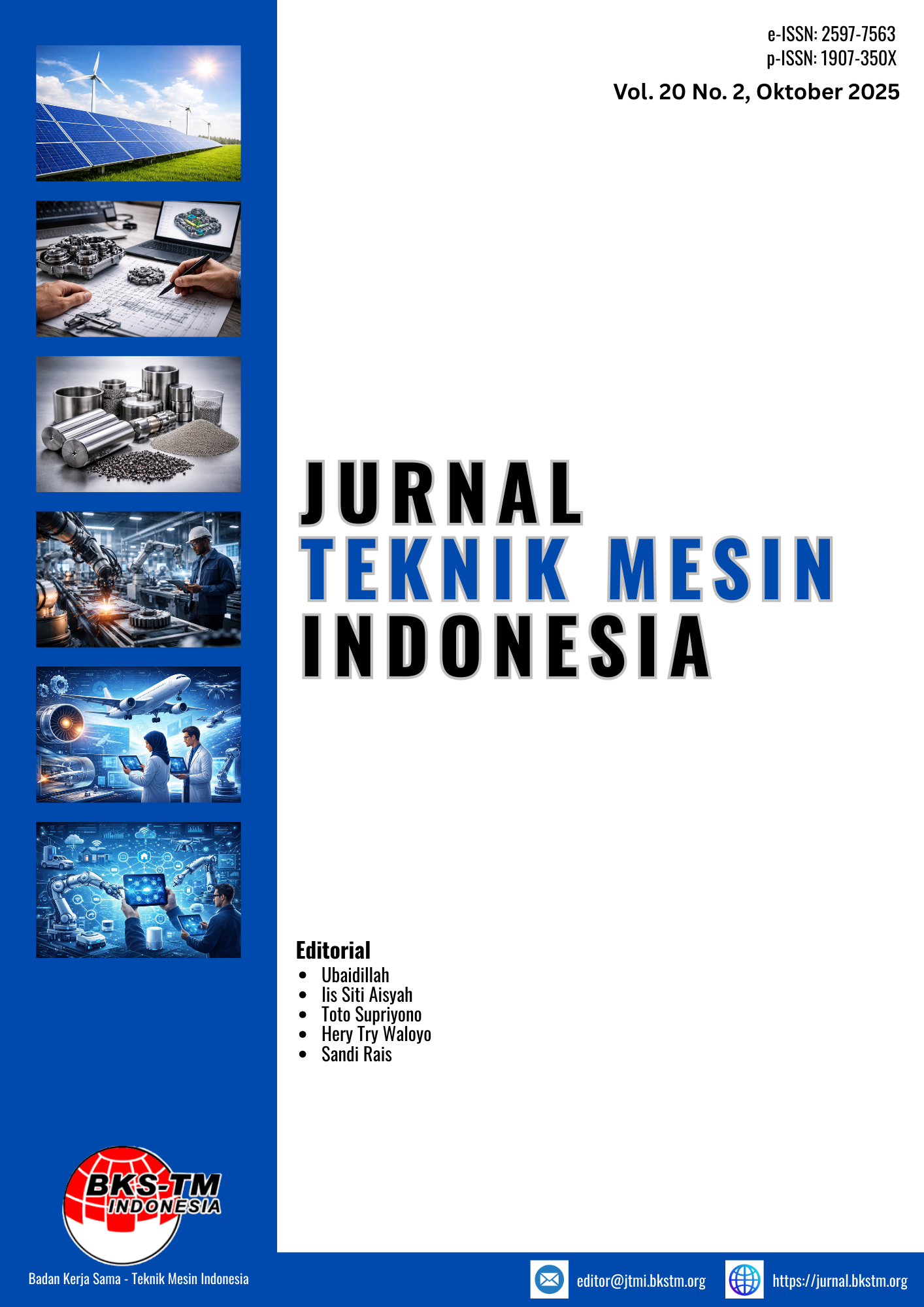
Vol. 20 No. 2 (2025)Gratitude is hereby expressed for the completion of this publication as part of an academic contribution to the advancement of knowledge and its application within the fields of engineering and technology. The manuscripts compiled in this edition represent a diverse range of analytical and applied approaches that are relevant to current industrial and societal needs. The topics presented include a structural analysis study employing the Finite Element Analysis (FEA) method on a trolley system to evaluate strength and stability under varying load conditions. In addition, the development of a multi-channel temperature-monitoring system based on a microcontroller is discussed, demonstrating the integration of embedded system technology into measurement and control. Design and analytical aspects are further strengthened by modelling a simple study desk using a finite element approach, emphasising material and structural optimisation. In the context of sustainability, the use of drones for dispersing maize seed is also explored as an innovative solution in modern agriculture. Other topics include the development of a smart detection-based driving safety system application and the design and construction of a conveyor prototype equipped with infrared sensors and an Arduino-based robotic arm for material handling automation. Furthermore, the analysis of motorcycle engine performance through combustion chamber modification contributes to the enhancement of energy system performance. Collectively, the manuscripts reflect a synergy between numerical analysis, control systems, automation, and technological innovation, aligned with the Sustainable Development Goals (SDGs), particularly in relation to industry, innovation, and infrastructure (SDG 9), quality education (SDG 4), and sustainable production systems. High appreciation is extended to the authors for their valuable scientific contributions. Sincere thanks are also conveyed to the reviewers for their critical and constructive evaluations, which have ensured the quality of this publication. Finally, it is hoped that this publication will provide broad benefits and serve as a relevant reference for the advancement of knowledge and engineering practice.
-
April
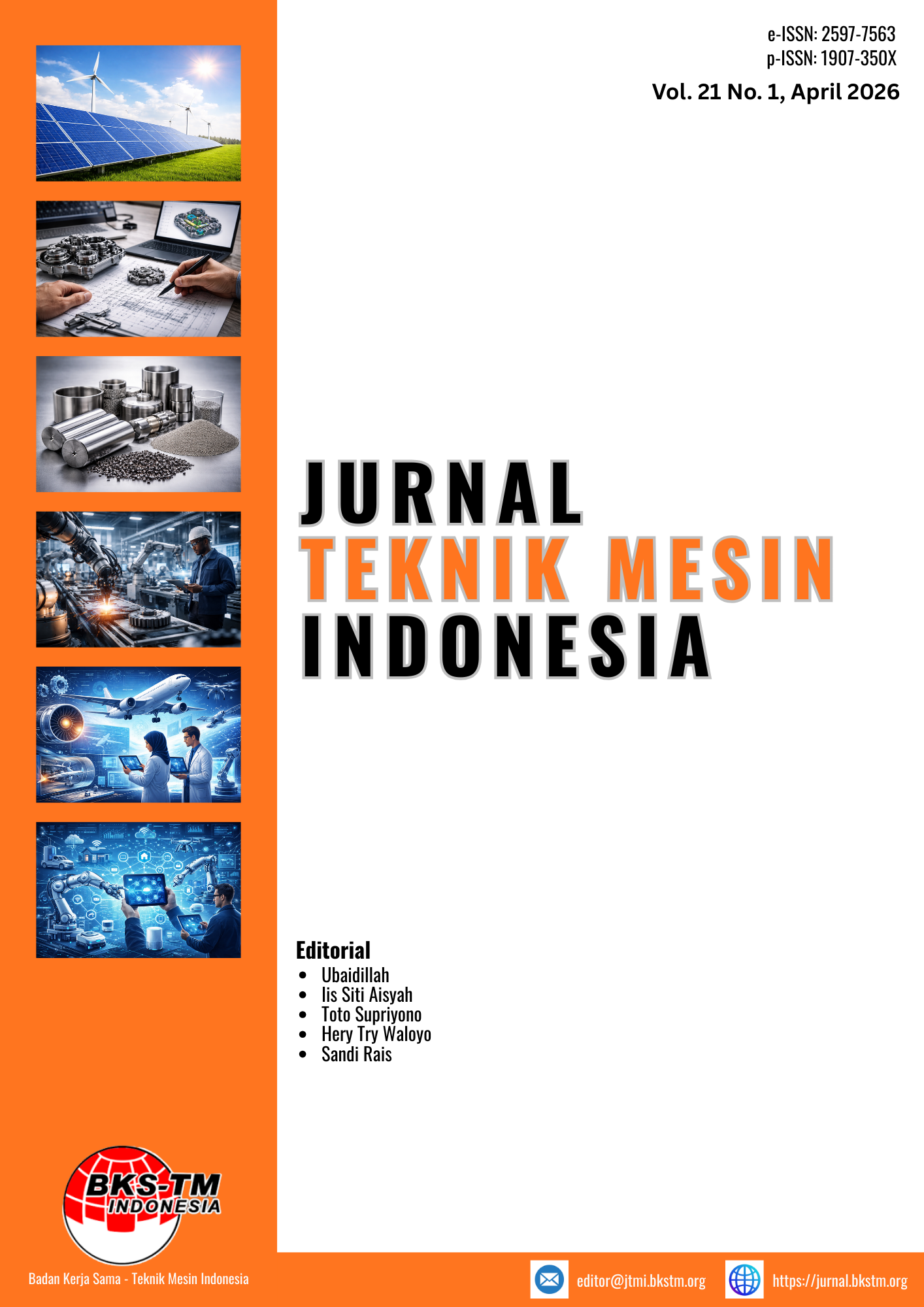
Vol. 21 No. 1 (2026)Praise be to Almighty God for the publication of Jurnal Teknik Mesin Indonesia (JTMI), Volume 21, Number 1, April 2026. This edition reaffirms JTMI’s commitment to providing a high-quality, credible, and relevant scientific publication platform aligned with technological advancements and industrial needs. In this issue, JTMI presents ten scholarly articles covering a broad range of mechanical engineering fields, including sustainable energy, manufacturing, engineering materials, design engineering, as well as mechanical systems and automation. This diversity of topics reflects the ongoing development of mechanical engineering research in Indonesia towards an interdisciplinary, applied, and solution-oriented direction.
The first article examines a life cycle assessment analysis of biobriquette production derived from corn cobs using tapioca as a binder. This study highlights the importance of sustainability approaches in the development of alternative energy. The subsequent article investigates the effect of compression ratio variations in internal combustion engines, contributing to improvements in energy efficiency within the transportation sector. Another study evaluates a solar-powered double-nozzle Venturi aeration system for water quality management in tilapia aquaculture, demonstrating the integration of renewable energy technologies within the fisheries sector. In the field of design engineering, one article presents product design modelling using the finite element method, illustrating the application of numerical simulation in product development.
Within the materials domain, a study analyses the effect of black oxide coating duration on the corrosion resistance and mechanical properties of AISI 4340 steel, providing insights into enhancing engineering material performance. In manufacturing, another study develops a cold forging process for horseshoe nails, indicating efforts to improve the efficiency of conventional production processes. In the context of modern manufacturing, one article applies a condition-based maintenance approach using multisensor data to a wire-cut machine, underscoring the importance of intelligent monitoring systems in industry. Furthermore, additional studies present the development of a livestock feed pellet machine and a pneumatic prototype for material thickness measurement, both reflecting an applied orientation in addressing industrial needs. Another article investigates the effect of piston crown and ring dimensions on motorcycle engine performance, contributing to the advancement of more efficient and reliable automotive technologies.
Overall, the articles in this issue not only demonstrate academic achievement but also reflect efforts to bridge the gap between research and industrial application. Accordingly, the direction of research development is increasingly oriented towards implementation and technological downstreaming. All manuscripts included in this issue have undergone a rigorous peer review process, ensuring their scientific quality, originality, and relevance. In this regard, sincere appreciation is extended to the authors for their valuable contributions, as well as to the reviewers for their dedication and professionalism in the evaluation process.
This edition supports the Sustainable Development Goals (SDGs), particularly in the areas of industry, innovation, and infrastructure (SDG 9), quality education (SDG 4), and sustainable production systems. JTMI remains committed to promoting publications that are not only academically but also impactful for society and industry. Moving forward, JTMI seeks to strengthen its position as an internationally competitive journal through continuous improvement in publication quality, enhancement of global collaboration, and a focus on strategic research areas.
Finally, academics, researchers, and practitioners are cordially invited to contribute to JTMI. Constructive feedback and suggestions are highly appreciated in order to further improve the quality of future editions.